Badminton Handbook · Chapter 12 of 16
Rules & scoring
Scoring (current and the new 3×15 system), serving, faults and lets, in plain language.
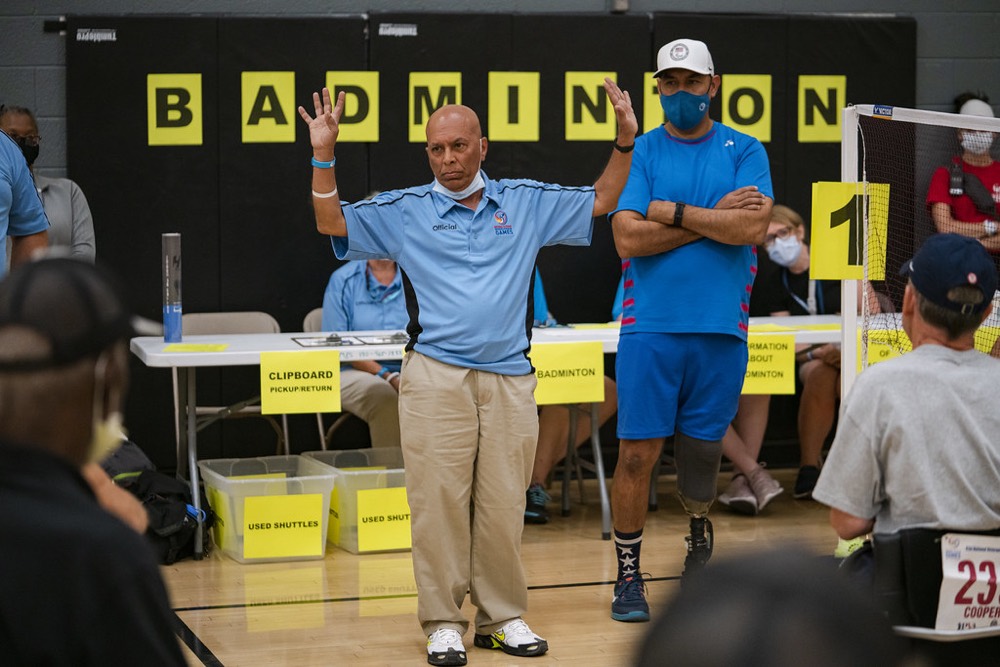
Scoring
Big change coming: the BWF has approved a 3×15 scoring system, in force from 4 January 2027. Some national associations have already started using it in their own events. Until it applies to your competition, the 3×21 system below is used. Always check your event's rules.
| 3×21 (current BWF Laws) | 3×15 (from 4 Jan 2027) | |
|---|---|---|
| Match | Best of three games | Best of three games |
| Game won at | 21 points | 15 points |
| Deuce | At 20–all, first to lead by 2 | At 14–all, first to lead by 2 |
| Cap | At 29–all, the 30th point wins | At 20–all, the 21st point wins |
| Interval in a game | Up to 60 s when the leader reaches 11 | 60 s when the leader reaches 8 |
| Change ends in game 3 | When a side reaches 11 | When a side reaches 8 |
| Between games | Up to 120 s | Up to 120 s (unchanged) |
Rally scoring: every rally wins a point, whoever served. The winner of a game serves first in the next.
Serving: where
- Server and receiver stand in diagonally opposite service courts, without touching the lines.
- Server's score even (0, 2, 4…) → serve from the right service court. Odd → from the left.
- Singles: if the server wins the rally, they score and serve again from the other court. If the receiver wins, they score and become the server.
- Doubles: players only swap service courts when their side is serving and wins a point. The service passes in a set order: initial server → partner of the initial receiver → partner of the initial server → initial receiver → initial server, and so on.
Serving: how (a legal serve)
- Some part of both feet of server and receiver stays on the floor and stationary until the serve is hit.
- The racket must first hit the base (cork) of the shuttle.
- The whole shuttle must be below 1.15 m from the floor when hit (the fixed-height rule).
- Once started, the racket must keep moving forwards in one continuous movement. No stopping or feinting, and no undue delay.
- The shuttle must travel upwards off the racket and land in the receiver's service court. Missing the shuttle when trying to serve is a fault.
- The server must not serve before the receiver is ready.
Common faults in a rally
- Shuttle lands outside the boundaries, fails to cross the net, or hits the ceiling/walls or a person.
- Touching the net or posts with racket, body or clothing while the shuttle is in play.
- Reaching over the net to hit the shuttle before it crosses. Following through over the net after hitting on your own side is allowed.
- Hitting the shuttle twice in succession (one player), or both partners hitting it in succession.
- "Slinging": catching and holding the shuttle on the racket then throwing it.
- Obstructing or deliberately distracting an opponent (for example shouting or gestures).
Lets (replay the point)
A let is called, for example, if the server serves before the receiver is ready, if both server and receiver fault at the same time, if, after the serve has been returned, the shuttle is caught on top of the net or is caught in the net after passing over it (outside wheelchair badminton; on a serve this is a fault), if the shuttle's base separates from the feathers, or for unforeseen accidents. The last server serves again.
Other rules worth knowing
- A toss decides who chooses to serve/receive or which end to start.
- Change ends after each game, and in the deciding game at the midpoint (see table).
- Coaching advice is only allowed when the shuttle is not in play.
- Play is continuous: you may not delay play to recover your breath.
This is a plain-language summary. The BWF Laws of Badminton are the official text.
It's free. If it helped your game, you can support it.