Badminton Handbook · Chapter 3 of 16
The court & net
Dimensions, lines, singles vs doubles boundaries and net height.
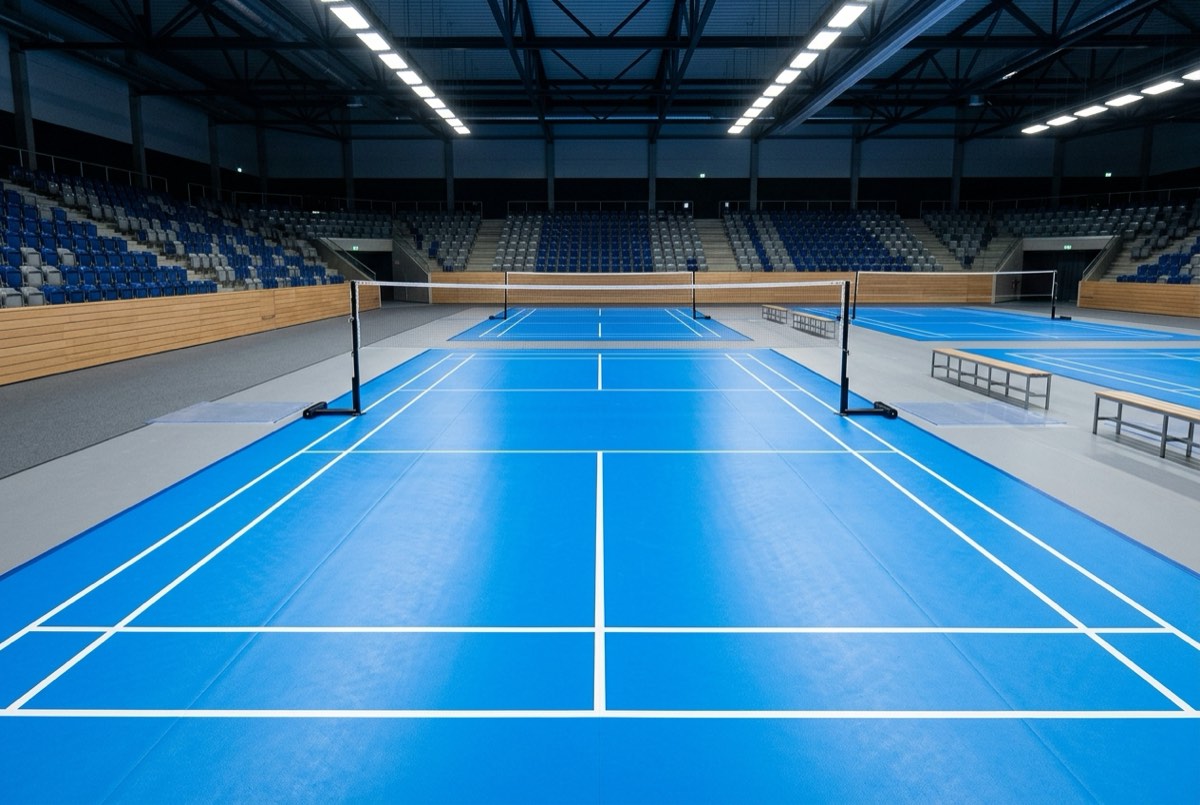
One court is used for both singles and doubles; different lines apply. All measurements below are from the BWF Laws.
| Full court length | 13.40 m |
|---|---|
| Doubles width | 6.10 m (outer side lines) |
| Singles width | 5.18 m (inner side lines) |
| Short service line | 1.98 m from the net |
| Doubles long service line | 0.76 m inside the back boundary line |
| Line width | 40 mm. Lines are part of the area they define: a shuttle touching the line is in. |
| Net height | 1.524 m at the centre, 1.55 m at the posts (on the doubles side lines) |
| Net | 760 mm deep, at least 6.1 m wide, 15–20 mm mesh, 75 mm white tape on top |
| Diagonal | 14.723 m. A useful check when marking a court |
Which lines count?
- Singles rally: long and narrow. Inner (singles) side lines and the back boundary line.
- Doubles rally: short and wide. Outer (doubles) side lines and the back boundary line.
- Singles serve: lands in the diagonal service court, between the short service line and the back boundary line, inside the singles side line.
- Doubles serve: lands between the short service line and the doubles long service line (0.76 m in from the back), inside the doubles side line. That is why high serves are rarer in doubles.
Tip for home courts: if you mark a garden court, measure the diagonal (14.72 m for a full court) to make sure the corners are square.
Enjoying ShuttleScience?
It's free. If it helped your game, you can support it.